Important things to know
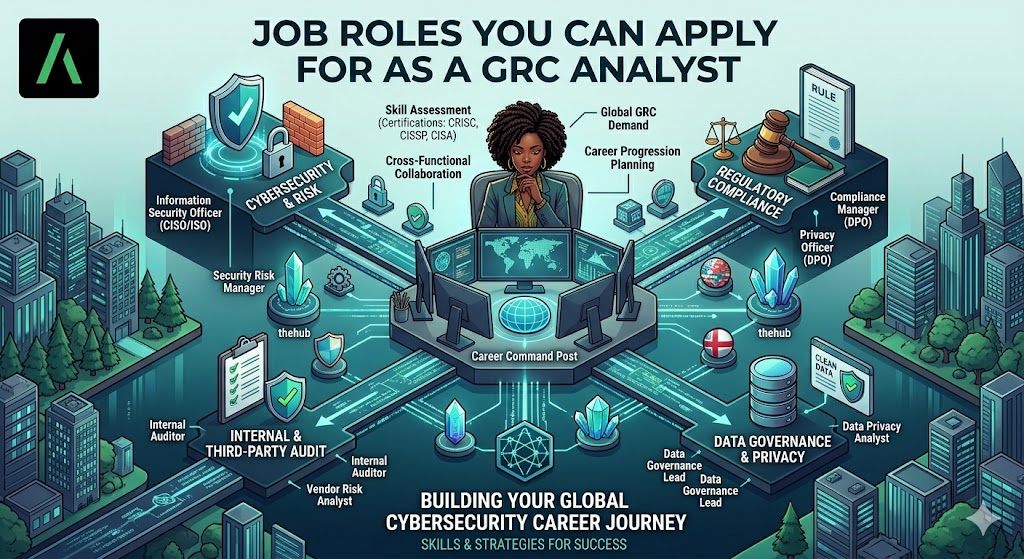
Many people believe that a career in Governance, Risk, and Compliance (GRC) follows a narrow or linear progression. In reality, the field offers a wide range of career opportunities across industries and organisational functions. The knowledge and competencies developed as a GRC Analyst, such as regulatory interpretation, risk evaluation, control implementation, and stakeholder communication are highly transferable and valued in many professional roles.
Across sectors including finance, healthcare, technology, and government, organisations increasingly need professionals who can bridge the gap between operational activities and regulatory expectations. As regulatory demands continue to grow and cyber risks evolve, individuals with GRC expertise are becoming essential to business success.
Whether you are beginning your journey in GRC or considering a specialised direction, your foundational experience can lead to numerous career pathways. This guide highlights several of the most in-demand and rewarding roles that GRC Analysts can pursue as they progress in their careers.
1. Compliance Analyst or Compliance Officer
A common transition for GRC professionals is into dedicated compliance positions. While GRC roles cover governance and risk management broadly, compliance-focused roles concentrate specifically on ensuring that organisations follow applicable laws, regulations, and internal policies.
Key Responsibilities
Professionals in compliance roles typically monitor regulatory developments and evaluate how these changes affect the organisation. They help ensure that company policies align with legal requirements and that employees follow established procedures. Compliance Analysts also assist during regulatory audits, prepare compliance reports, and support internal training initiatives to promote adherence to standards.
Regulatory Areas
Compliance work may involve multiple regulatory frameworks depending on the industry. These can include data protection laws such as the UK General Data Protection Regulation, financial regulations from bodies like the Financial Conduct Authority, or industry-specific standards such as PCI DSS for payment security.
Industries Hiring
Compliance professionals are highly sought after in financial services, healthcare, pharmaceutical companies, and technology firms.
Individuals with GRC experience already understand how regulations translate into internal controls and policies. Their familiarity with compliance monitoring, documentation, and audit preparation gives them a strong advantage in these roles.
2. Risk Analyst or Risk Management Specialist
For professionals who enjoy evaluating threats and analysing potential business impacts, a role in risk management may be the ideal career progression.
Key Responsibilities
Risk Analysts identify and assess different categories of risk affecting an organisation. They maintain risk registers, conduct risk assessments, and evaluate the likelihood and potential impact of threats. Their work often involves recommending mitigation strategies and supporting leadership with risk-informed decision making.
Types of Risk Addressed
Risk management roles often involve analysing various forms of organisational risk, including:
- Operational risk, which relates to failures in processes, systems, or human activity.
- Cybersecurity risk, involving threats to information assets and digital infrastructure.
- Third-party risk, introduced by vendors, suppliers, or service providers.
- Regulatory risk, associated with non-compliance with legal obligations.
Because GRC professionals already work with risk frameworks, assessment methodologies, and control evaluations, transitioning into a risk-focused role is often seamless. Their ability to communicate risk clearly to leadership also makes them valuable contributors to strategic planning.
3. Cybersecurity GRC Analyst
As cyber threats become more sophisticated, organisations require professionals who can connect technical security operations with governance and compliance requirements. Cybersecurity GRC roles are therefore among the fastest-growing positions in the industry.
Key Responsibilities
Cybersecurity GRC Analysts help implement security frameworks, monitor compliance with security standards, and support certification processes. They also assist in ensuring that cybersecurity practices meet regulatory expectations and organisational policies.
Common Security Frameworks
Professionals in this area frequently work with widely recognised frameworks such as ISO/IEC 27001, the NIST Cybersecurity Framework, and assurance frameworks like SOC 2.
Their understanding of control frameworks, risk management principles, and regulatory requirements allows GRC Analysts to translate technical security practices into governance processes. Many professionals enhance their expertise through advanced certifications such as Certified Information Systems Security Professional or Certified Information Security Manager.
4. Data Protection and Privacy Specialist
Data protection and privacy have become critical priorities for organisations worldwide. As regulations governing personal data continue to expand, there is growing demand for professionals who understand privacy governance.
Potential Roles
Career paths in this area include Data Protection Officer, Privacy Analyst, and Data Governance Specialist.
Core Responsibilities
Privacy professionals help design and maintain data protection programs, conduct privacy risk assessments, and ensure that organisations process personal data responsibly. Their work may involve performing data protection impact assessments, responding to subject access requests, and coordinating breach notification procedures.
Privacy is fundamentally built on compliance and risk management principles. Since GRC Analysts already work with regulatory mapping, policy development, and stakeholder coordination, they are well positioned to transition into privacy-focused roles. Certifications such as Certified Information Privacy Manager or Certified Information Privacy Professional Europe can further strengthen expertise.
5. GRC Consultant
For professionals who enjoy working in dynamic environments and solving complex organisational challenges, consulting can be an exciting career option.
Key Responsibilities
GRC Consultants support organisations in designing and improving governance and compliance programs. They often conduct gap assessments against industry standards, implement compliance frameworks, and guide companies through audit preparation and certification processes.
Typical Employers
Consultants may work for global consulting firms such as Deloitte, PwC, EY, or KPMG, as well as specialised cybersecurity advisory firms.
Hands-on experience with governance frameworks, policies, and compliance processes provides practical credibility. Consultants must understand both theory and real-world implementation, making prior GRC experience extremely valuable.
6. Information Security Analyst
Another common pathway is transitioning into information security roles, where professionals focus on protecting organisational systems while maintaining governance oversight.
Key Responsibilities
Information Security Analysts monitor threats, implement security policies, and conduct security risk assessments. They also assist with vulnerability management, control testing, and ensuring compliance with security frameworks.
Frameworks Used
Security professionals often apply standards such as ISO/IEC 27001 and the NIST Cybersecurity Framework, along with best practice controls from the Center for Internet Security.
GRC professionals already understand governance frameworks and compliance requirements. By developing additional technical knowledge such as familiarity with security monitoring tools or vulnerability scanners, they can effectively move into information security roles.
7. Third-Party Risk Management Specialist
Modern organisations depend on complex vendor ecosystems. As a result, managing risks associated with suppliers and partners has become a critical business function.
Key Responsibilities
Third-Party Risk Management specialists evaluate the security and compliance posture of vendors before and during business relationships. This involves reviewing security questionnaires, conducting risk assessments, evaluating contracts, and monitoring supplier compliance.
Industries with High Demand
Financial institutions, technology companies, cloud providers, and healthcare organisations frequently require professionals dedicated to managing vendor risk.
GRC Analysts already possess experience in risk documentation, compliance assessments, and audit preparation. These same skills apply directly to evaluating and managing third-party relationships.
8. Security Awareness Trainer
Not all governance roles focus strictly on documentation or auditing. Security awareness professionals focus on addressing the human element of cybersecurity risk.
Key Responsibilities
Security Awareness Trainers design and deliver training programs that help employees understand security risks and adopt safer behaviours. They may also develop awareness campaigns, run phishing simulations, and promote a culture of security throughout the organisation.
GRC professionals understand regulatory expectations and organisational policies in detail. Their ability to simplify complex requirements and communicate them clearly makes them effective educators and advocates for security awareness.
9. Vulnerability Management or Incident Response Specialist
For those interested in more operational aspects of cybersecurity, vulnerability management or incident response roles provide engaging career opportunities.
Vulnerability Management
Professionals in this field identify security weaknesses within systems and applications. They prioritise remediation efforts based on risk severity and coordinate with technical teams to ensure vulnerabilities are addressed promptly.
Incident Response Management
Incident Response Managers coordinate organisational actions during cybersecurity incidents. They oversee investigation processes, manage response teams, document lessons learned, and ensure that incidents are handled according to regulatory obligations.
The ability to evaluate risk and prioritise remediation efforts is essential in vulnerability management. Similarly, incident response requires an understanding of regulatory requirements, reporting obligations, and governance procedures, areas where GRC professionals already have experience.
10. GRC Lead or GRC Manager
With experience and strategic insight, many GRC professionals progress into leadership roles responsible for overseeing enterprise governance programs.
GRC Managers develop risk management strategies, oversee compliance initiatives, coordinate audit activities, and manage cross-functional governance processes. They also report risk posture and compliance status to senior leadership and organisational boards.
Success in leadership positions requires strong strategic thinking, stakeholder management, and deep knowledge of regulatory frameworks. Policy oversight, program management, and organisational influence are also essential.
Typical Employers
Large enterprises, multinational organisations, government agencies, and regulated industries often employ GRC leaders to oversee enterprise risk and compliance programs.
A background in Governance, Risk, and Compliance offers one of the most versatile career foundations in the modern professional landscape. The competencies developed, such as regulatory interpretation, risk assessment, control design, and stakeholder communication are applicable across multiple disciplines.
From Information Security Analyst and Compliance Officer to Third-Party Risk Specialist and Vulnerability Manager, the range of career possibilities continues to expand. As organisations face growing regulatory pressure and increasing cybersecurity threats, professionals who understand governance and risk management will remain in high demand.
Your next career step will depend on your personal interests and strengths. Those interested in technical depth may pursue cybersecurity or vulnerability management roles. Professionals who enjoy working with people and organisational culture may prefer security awareness or privacy governance. Individuals drawn to strategy and leadership may eventually progress into consulting or senior GRC management positions.
With the right certifications, continuous learning, and practical experience, GRC professionals can navigate multiple career pathways and advance into strategic leadership roles.
Ready to Take the Next Step? We strongly recommend that you acquire the needed experience and skills from our internship. It has helped people boost their confidence and we can help you too. Book a free clarity call with us here.