Important things to know
The digital sky is expanding, but so is the storm of cyber threats. As organizations move their most sensitive data to the cloud, the need for guardians of that data has never been higher. If you are looking to break into the tech industry, there has never been a better time to pursue an entry-level cloud security job.
Why Cloud Security is the Career of the Future
The numbers tell a compelling story. According to recent reports from Cybersecurity Ventures, there are an estimated 3.5 million unfilled cybersecurity jobs globally in 2025. Within this gap, cloud security is cited by ISC2 as one of the top two most critical skill shortages facing organizations today. As businesses migrate from traditional servers to platforms like AWS, Azure, and Google Cloud, they aren't just moving data; they are shifting their entire risk profile.
Cloud security is the specialized field of protecting these virtual environments from misconfigurations, data breaches, and sophisticated AI-driven attacks. For aspiring professionals, recent graduates, and career changers, this demand creates a unique "gold rush" opportunity. While the field is technical, entry-level positions are highly accessible if you follow a structured preparation path.
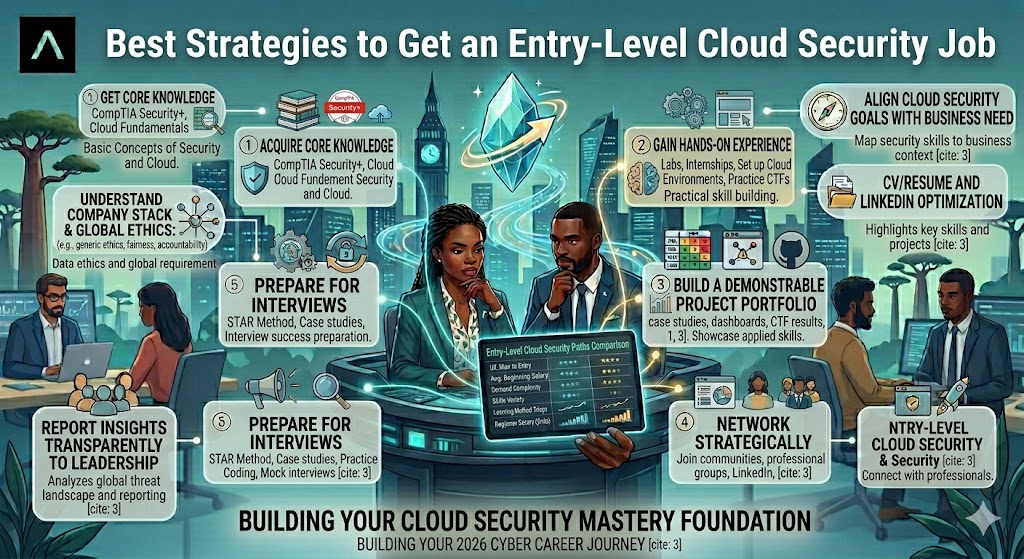
At Amdari, we’ve seen hundreds of beginners transform into security professionals through our cloud computing and cybersecurity programs. In this guide, we will outline the seven essential strategies to help you land your first entry-level cloud security job.
1. Build a Strong Foundation in Cloud and Security Basics
You cannot secure what you do not understand. Before diving into complex stuff. you must master the “Shared Responsibility Model” the concept that cloud providers secure the infrastructure while you secure the data.
Key Knowledge Areas:
- Cloud Architecture: Understanding how VPCs (Virtual Private Clouds), subnets, and gateways work.
- Common Vulnerabilities: Learning how a single "public" S3 bucket can lead to a multi-million dollar data breach.
- IAM (Identity and Access Management): This is the heart of cloud security. You must know how to manage who can see and do what.
How to Start:
Begin with free tiers from AWS or Microsoft Learn. However, for those seeking a professional edge, our Cloud Security Internship provides hands-on labs that simulate real-world breaches, giving you the context that self-study often misses.
2. Earn Relevant Certifications
In a field where employers often filter resumes by credentials, cloud security certifications act as a powerful validation of your skills. They prove you have the "baseline" knowledge required to handle sensitive environments.
Top Entry-Level Certifications:
- CompTIA Security+: The "gold standard" for general security basics.
- AWS Certified Cloud Practitioner / Security – Specialty: Essential for the world’s most popular cloud platform.
- Microsoft SC-900 / AZ-500: Perfect for organizations integrated into the Microsoft ecosystem.
Don't try to collect them all at once. Focus on one major provider (like AWS) and pair it with a foundational cert like Security+. Our institution offers guided certification tracks that include practice exams and 1-on-1 mentorship to help you get certified in 3–6 months.
3. Gain Practical Experience Through Projects
"How do I get experience if I can't get a job?" This is the classic catch-22. The answer in cloud security is project-based learning.
Portfolio-Building Ideas:
- The Resume Challenge: Host your digital resume on a static website (like AWS S3) but secure it using CloudFront, SSL/TLS, and restrictive IAM policies.
- Security Auditing: Use tools like Prowler or AWS Config to run a security audit on a mock environment and document your findings.
- Honeytokens: Set up a "honeypot" (a fake data file) and configure alerts to notify you if anyone accesses it.
Highlighting these projects on your GitHub or personal blog shows recruiters that you can actually do the work, not just pass a test.
4. Develop Key Soft and Technical Skills
A successful cloud security professional is part engineer, part detective, and part communicator.
- Technical Skills: You should gain familiarity with Python for scripting and Terraform for Infrastructure as Code (IaC). Knowing how to automate security checks is a major "plus" for entry-level candidates.
- Soft Skills: You must be able to explain to a non-technical manager why a certain security protocol is necessary. Problem-solving under pressure is equally vital.
Our interactive workshops at Amdari focus specifically on these "hybrid" skills, ensuring you’re ready for the day-to-day realities of the job.
5. Network and Build Your Professional Brand
In the tech world, your "digital footprint" is your secondary resume.
- LinkedIn: Optimize your profile with keywords like "Cloud Compliance," "Threat Detection," and "Zero Trust."
- Communities: Join the Cloud Security Alliance (CSA) or engage in subreddits like r/cloudsecurity.
- Content Creation: Write a short post about a security concept you just learned. It shows passion and a "continuous learning" mindset.
6. Craft a Standout Resume and Ace the Interview
To land an entry-level cloud security job, your resume must be machine-readable (ATS-friendly) and human-engaging.
- Tailor Everything: If a job description mentions "compliance," make sure your resume highlights your knowledge of GDPR, HIPAA, or SOC2.
- Prepare for "The Big Questions": Be ready to explain "Zero Trust Architecture" or the difference between "Encryption at Rest" and "Encryption in Transit."
Sample Interview Question: "Explain the Principle of Least Privilege."
Answer: It is the practice of limiting user access rights to the bare minimum permissions they need to perform their work.
7. Overcome Common Challenges
It’s normal to feel Imposter Syndrome. The cloud changes every day, and even experts are constantly learning. Don't be discouraged by "entry-level" job postings that ask for 5 years of experience; these are often "wish lists." If you meet 60% of the criteria and have a solid portfolio, apply anyway.
Many of our students transitioned from retail, teaching, or general IT by focusing on their transferable skills like attention to detail and crisis management.
Landing an entry-level cloud security job is within reach. You need to primarily gain experience, hone your skills, network, polish your application, and tackle challenges head-on. You'll stand out in this booming field.
Cloud's growth means endless opportunities but only for the prepared.
At Amdari we offer more than courses; we're your launchpad with programs that give expert guidance, and job readiness support. Our alumni land roles at 2x the national average speed. Watch testimonials here. Click here to book a free clarity call and speak with our team.